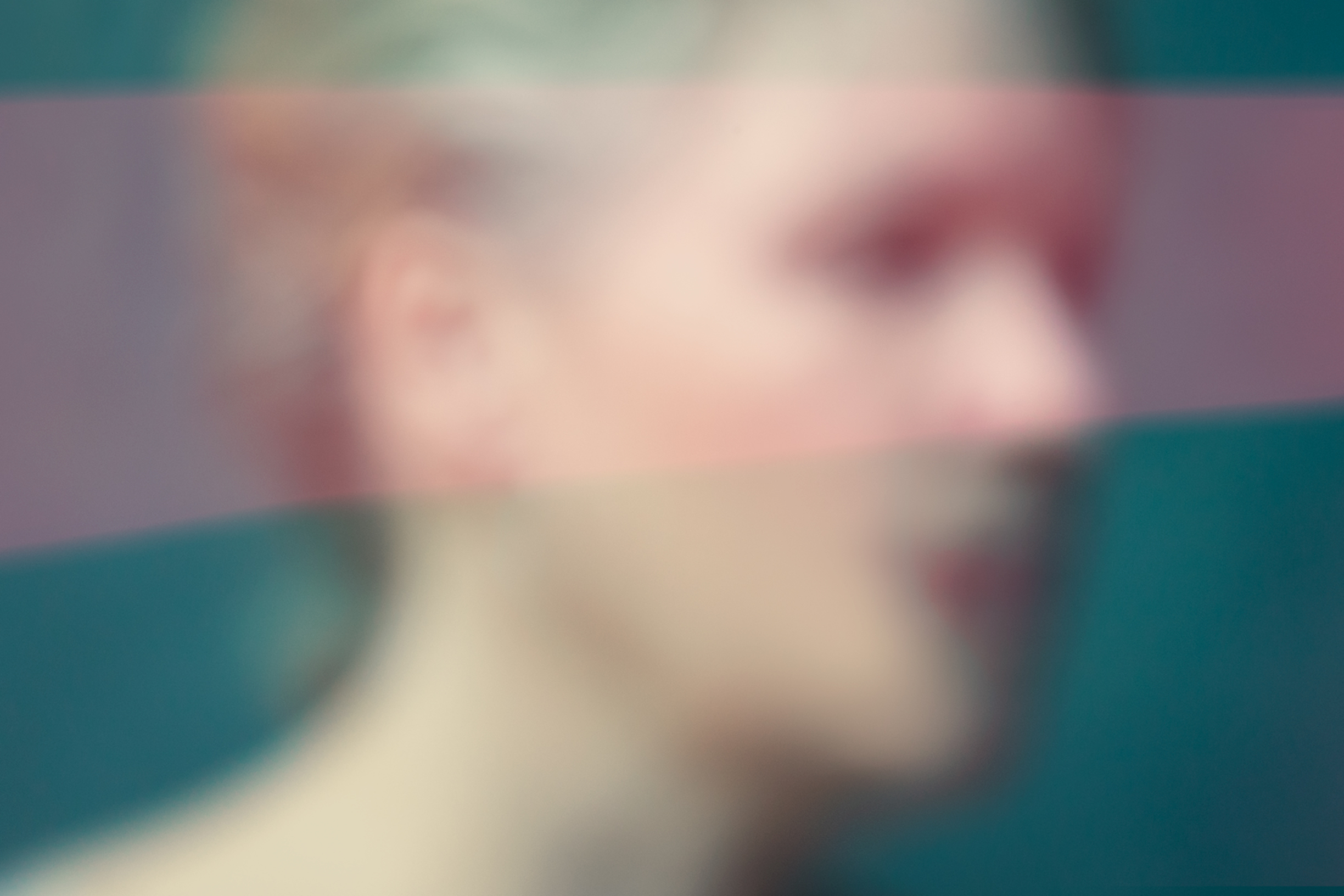
My work begins with the uncertainty of looking. I live with impaired vision and use photography, film, monoprint, and installation to understand how perception forms and memory is reconstructed. A photograph can fail as evidence while still carrying an emotional truth.
I deliberately introduce impairment into the camera, building instability into the photograph from the start. Handmade lenses, aged glass, altered sensors, and translucent materials change how light enters the camera and how the image is recorded. Light and time are slippery, unstable materials, altered by the body, the camera, and the surface. The camera still makes photographs, but differently.
In monoprints and installations, plastics and damaged surfaces may obscure images, soften details, or interrupt what remains visible. Like memory, these materials can hold something in place while making other parts difficult to retrieve. What is missing becomes an important part of what remains. I ask the work to tell me what it knows.
When our senses no longer provide what we expect, the body adapts. We learn to rely on fragments, fill in what is missing, and trust what we think we remember. Sometimes those memories are not accurate, but the emotions attached to them are very real.
I want the viewer to feel that sharpness does not equal truth and that seeing something familiar differently may influence how we see ourselves.
